Gresham College provides outstanding educational talks and videos for the public free of charge. There are over 2,500 videos available on our website. Your support will help us to encourage people's love of learning for many years to come.
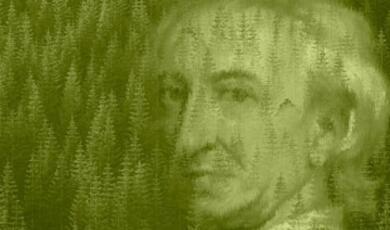
Air pollution, the usefulness of trees, ideas for a green belt are not concerns we associate with the 1600s. But John Evelyn, writer, diarist and gardener, was unusual. His thinking in Fumifugium (1661) about air quality, and Sylva (1664) about trees, seems astonishingly close to our own today.

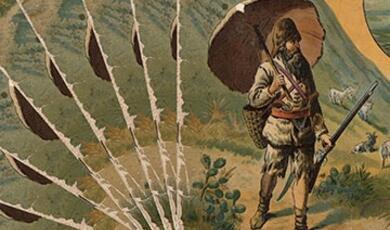
How does fiction make itself seem like fact? Professor John Mullan begins where novels begin: with Defoe’s Robinson Crusoe, which showed every novel that followed how to make a ‘strange surprising’ story seem entirely ‘probable’ (the word that eighteenth-century pioneers of fiction liked t
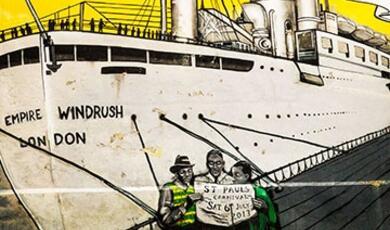
London in the 1950s and 60s was a crucible in which West Indian writers, artists, thinkers and scholars imagined new futures for the Caribbean, Britain and the world.
From The Merchant of Venice to The Taming of the Shrew, it’s easy to see how Shakespeare’s plays can cause offence to contemporary audiences. Is it harder to teach Shakespeare today than in the past? Have ideas about what is offensive in Shakespeare changed over time?
How has lockdown affected the Family Court? Gresham Law Professor Jo Delahunty QC chairs a panel of senior lawyers and journalists discussing the issues faced by family courts and by families during lockdown.
Mathematics and art are more similar than is commonly thought. Each is concerned with the process of being highly creative with abstract objects and of producing everlasting work of great aesthetic beauty.
This lecture provides an insider’s brutally honest guide to what it's like to be a self-employed barrister - the highs and lows of the career, the work behind the scenes that makes a difference to outcomes in court, and the art of persuasion in it.
Advances in medicine challenge allow us to sustain life for longer, but at what cost and at whose choice? Why might the court intervene when a devout Jehovah Witness parent refuses a life-saving blood transfer to their child?
Stories about islands punctuate the careers of Michael Powell and Emeric Pressburger, from Powell’s breakthrough with Edge of the World (1936) to the Hebridean journey of I Know Where I’m Going! (1945), and the final act of their Tales of Hoffmann (1951).